
Shawscope: Volume Three (Blu-ray Review – Part 2)
Director
VariousRelease Date(s)
Various (December 3, 2024)Studio(s)
Shaw Brothers Studio/Celestial Pictures (Arrow Video)- Film/Program Grade: See Below
- Video Grade: See Below
- Audio Grade: See Below
- Extras Grade: A+
- Overall Grade: A+

Review
THIS REVIEW CONTINUES FROM PART 1 [Click here to go back...]
From the mid-1960s and through to the early 1980s and beyond, the Hong Kong-based Shaw Brothers Studio ruled the roost when it came to martial arts cinema. Producing a number of successful films that traveled all over the world, particularly to the US, Britain, and Europe, their brand of extreme hand-to-hand combat films entertained audiences under a myriad of different titles and in various languages. Today, they’re still beloved to genre fans, particularly to those who grew up seeing these films in grindhouse cinemas or repeatedly on television.
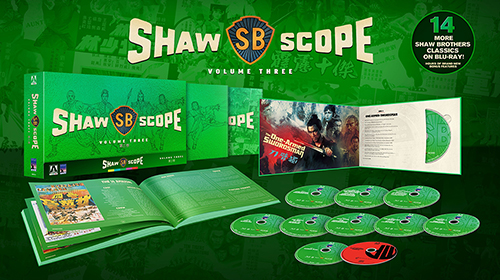
Arrow Video presents twelve of these films, encapsulating the Shawscope: Volume Three Blu-ray boxed set, a massive and beautifully-rendered release. It’s loaded with an amazing amount of extras per film in gorgeous packaging with an accompanying booklet, making it a massive undertaking for a single review. Because of its size, I’ll be covering this release one disc at a time, updating this review of the entire set over time to go over it in better detail.
Below, you’ll find quick links that will take you to reviews of Discs 6 through 10:
(Click Below to Jump to Individual Disc/Film Reviews):
DISC SIX: THE SENTIMENTAL SWORDSMAN
DISC SIX (JADE TIGER)
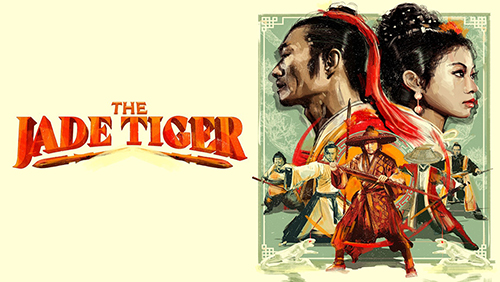
Jade Tiger (aka Baiyu laohu, Pai yu lao hu, and The Jade Tiger) was released in 1977 in Hong Kong, and in Honolulu and San Francisco with subtitles. In the film, the Zhao Clan and the Tang Clan are bitter rivals, increasing ten-fold when one of the Zhao elders is found decapitated during the nuptials of Wuji (Ti Lung), his son. Attempting to hide his identity, Wuji plans to find his father’s killers and infiltrate the Tangs in order to locate the person directly responsible. However, not everything is as it seems when multiple friends and foes reveal their true selves, leading Wuji into a whirlwind of conspiratorial intrigue at the hands of Tang Clan leader, Que (Lo Lieh). Also among the cast are Ku Feng, Lily Li, Xiao Yao, Fan Mui-Sang, Yueh Hua, Shih Szu, Derek Yee Tung-Sing, Chiang Nan, Ching Miao, Wang Hseih, Chan Shen, and Norman Tsui Siu-Keung.
One of director Chor Yuen’s more celebrated films, Jade Tiger is based upon the writings of Gu Long and contains a multitude of characters and subplots, some of which were not used in the film version. This is very much appreciated since an initial watch of Jade Tiger leads to a lot of confusion. There’s an endless cavalcade of characters, with most revealing themselves to be in league with one clan or the other, or confessing to be other people entirely. If you can manage to wade through the moral ambiguity of the various characters, you’ll find a grounded piece of material, no matter how impenetrable it may seem. It’s a dark and satirical work that openly comments upon martial arts film plots, almost to the point of breaking the fourth wall. For long-time wuxia fans, the action, the performances, the set pieces, the costumes, and scenery are all on point, making for a somewhat confusing but nonetheless entertaining wuxia adventure.
Jade Tiger was shot by director of photography Wong Chit on 35mm film with anamorphic lenses, finished photochemically, and presented in the aspect ratio of 2.35:1. Arrow Video’s presentation of the film is sourced from a 2024 2K restoration by Arrow Films in collaboration with L’Immagine Ritrovata, the Hong Kong Film Archive, and Celestial Pictures, with grading by Dragon DI, Wales. It’s another solid and organic picture, though the source elements do show obvious wear and tear. There are prominent scratches in the opening couple of minutes, badly-damaged end credits, occasional instability, thinning frame edges, and some minor color and contrast imbalances. However, the picture is natural with high levels of detail and mostly fine layers of grain, with a bitrate sitting mostly between 20 and 30Mbps. Outside of the built-in flaws, there’s excellent saturation and contrast to be had, with a clear and mostly stable picture.
Audio is included in Mandarin 1.0 LPCM with optional English subtitles. It’s a solid single-channel soundtrack with fine support for dialogue and sound effects, as well as score. It’s also clean with no apparent issues.
The following extras are included:
- Audio Commentary with Ian Jane
- Hong Kong Theatrical Trailer (HD – 3:24)
Commentary duties are handled by Ian Jane of the Rock! Shock! Pop! website. Besides just the usual reading of cast and crew biographies, Jane also references and reads various interviews with the collaborators from varying magazines, and speaks about their photographs in said magazines. He also explores and examines Chor Yuen’s film career at Shaw Brothers Studio, Jade Tiger’s various home video releases, the careers of others involved with it, and its literary source. It’s an interesting track that takes less obvious approaches to covering its subject matter. Also included is the Hong Kong theatrical trailer. Not carried over from the Region 2 Wild Side Video DVD release is an interview with Chor Yuen, a still gallery, and a short trailer, presumably from Celestial Pictures.
JADE TIGER (FILM/VIDEO/AUDIO/EXTRAS): B/B+/B+/C+
DISC SIX (THE SENTIMENTAL SWORDSMAN)
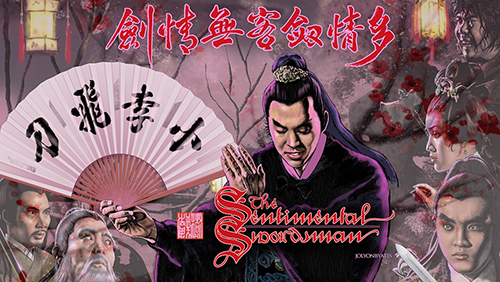
The Sentimental Swordsman (aka Duo qing jian ke wu qing jian, To ching chien ko wu ching chien, and Sword of Emotion) was released in 1977 in Hong Kong, and in Honolulu and Los Angeles with subtitles the following year. In the film, a traveling swordsman, Li Xunhuan (Ti Lung), has a mild malady and comforts himself with wine, with his trusted servant, Tie Chuanjia (Fan Mui-Sang), by his side. Along the way he meets Ah Fei (Derek Yee Tung-Sing), a nomadic swordsman who becomes his trusted ally once he arrives in his former home town of Xing Yun Chuang, where he left his great love Lin Shiyin (Candice Yu On-On), who married Long Xiaoyun (Yueh Hua), a man he owed his life to. Upon his arrival, he finds himself hunted by hired assassins and accused of various crimes. Ah Fei soon comes to his aid, especially after the real perpetrator, known as the “Plum Blossom Bandit,” also attempts to kill him. He must now clear his good name with the help of the local Shaolin temple and discover who is trying to frame him.
Based upon the Xiaoli Feidao Series novel Duoqing Jianke Wuqing Jian by Gu Long, The Sentimental Swordsman continued Chor Yuen’s and Ti Lung’s frequent collaborations. Though it has some elements in common with Clans of Intrigue, it’s much less convoluted than its predecessors with a more straightforward narrative that has its share of twists and turns, but not at the cost of the audience’s attention. Ti Lung and Derek Yee Tung-Sing, along with Fan Mui-Sang, make for a dynamic screen team. Chor Yuen’s direction and framing allows for some beautiful shots and excellent fight choreography, including some actual location photography, which wasn’t common for Shaw Brothers productions at that time. The film was such a success that two sequels would follow, Return of the Sentimental Swordsman in 1981 and Perils of the Sentimental Swordsman in 1982. There were also three television spin-offs, two titled The Romantic Swordsman, from 1978 and 1995 respectively, and Flying Daggers in 2003.
The Sentimental Swordsman was shot by director of photography Wong Chit on 35mm film with anamorphic lenses, finished photochemically, and presented in the aspect ratio of 2.35:1. Arrow Video’s presentation of the film is sourced from a 2024 2K restoration by Arrow Films in collaboration with L’Immagine Ritrovata, the Hong Kong Film Archive, and Celestial Pictures, with grading by Dragon DI, Wales. It’s an organic presentation and the source elements appear to be in better condition than some of the previous films, outside of transitions and title opticals. The bitrate, which sits between 20 and 30Mbps most of the time, serves the lovely on-location photography, as well as the usual Shaw Brothers sets, quite well. Detail is high with nice saturation and perfect contrast, allowing for deep blacks. The picture is also stable and clean. Truthfully, it’s one of the best presentations offered in this release.
Audio is included in Mandarin or Cantonese 1.0 LPCM with optional English subtitles. Both are very nice options. The Cantonese track has a little more body to it, while the Mandarin track is a little quieter. The Cantonese dubbing is also more canned by comparison. Either way, there’s plenty of support for sound effects and score on both tracks, with no issues to speak of. As for the performances, it’s a toss-up, though my ear tends to lean more towards the Mandarin.
The following extras are included:
- Audio Commentary with David West
- Theatrical Trailers:
- Hong Kong Theatrical Trailer (Mandarin #1) (HD – 3:06)
- Hong Kong Theatrical Trailer (Mandarin #2) (HD – 3:37)
- Hong Kong Theatrical Trailer (Cantonese) (HD – 3:06)
David West, author of Chasing Dragons: An Introduction to the Martial Arts Film, returns once again for another audio commentary. Like his previous commentary for One-Armed Swordsman, it’s a much more reactionary track than some of the other commentaries in this release. While commenting upon events as they happen, as well as the sets and the cinematography, he also examines this period in Shaw Brothers history, Chor Yuen’s directorial approach, facets of the film and their historical basis, the careers of the cast and crew, and the sequels that followed. It’s a very nice track. Last are two theatrical trailers in Mandarin and one in Cantonese. Not carried over from the 2006 Region-Free DVD release by Wild Side Video in France is an interview with Candice Yu On-On and a video trailer. Also not featured from the Region B Blu-ray release by Koch Media in Germany is the Elegant Trails: Ti Lung documentary and a still gallery.
THE SENTIMENTAL SWORDSMAN (FILM/VIDEO/AUDIO/EXTRAS): A-/A-/B+/B-
DISC SEVEN (AVENGING EAGLE)
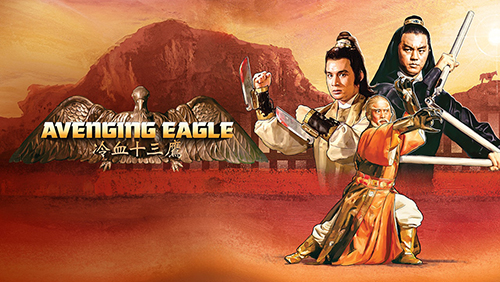
Avenging Eagle (aka Lengxue shisan ying, Laang huet sap saam ying, The Avenging Eagle) was released in 1978 in Hong Kong, and Honolulu and Los Angeles with subtitles in 1978 and 1979 respectively. In the film, Qi Mingxing (Ti Lung) wanders the desert on horseback, dazed and nearly dead. He’s saved by a stranger, Zhuo Yifan (Alexander Fu Sheng), who rescues him and gives him water. Though their relationship is tenuous, Zhuo takes an interest in Qi and follows him, despite Qi being hunted by the Iron Boat Clan. Qi reveals that he was formerly one of the clan’s Thirteen Eagles, a group of deadly assassins raised from childhood by the ruthless Yue Xihong (Ku Feng) to do his bidding. After a tragic personal encounter that makes Qi question what he’s doing, he openly leaves the clan, but will be forever hunted until he’s dead. Zhuo Yifan reveals that his family was murdered some time ago, and that both he and Qi share a common enemy, Yue Xihong, whom they must face head on if they can survive the remaining Eagles. The rest of the cast includes Wang Lung-wei, Bruce Tong, Lam Fai-wong, Huang Pei-Chih, Eddy Ko Hung, Jamie Luk Kim-Ming, Yuen Bun, Peter Chan Lung, Chui Fat, Shih Szu, and Jenny Tseng.
Based upon screenwriter Ni Kuang’s novel of the same name and adapted by the author, Avenging Eagle is a solid and entertaining action extravaganza with dramatic twists and turns that are somewhat obvious, but nonetheless intriguing. Ti Lung and Alexander Fu Sheng light up the screen as a pair of frenemies with a destination that seems all too obvious, but still packs a dramatic wallop. Fight scenes are choreographed beautifully by Tong Kai and Huang Pei-Chih, the latter appearing as one of the deadly “Eagles.” Directed Sun Chung, who’s perhaps better known for helming the 1982 horror film Human Lanterns, keeps things moving briskly, even during flashbacks that flesh the backstories of Qi Mingxing and Zhuo Yifan out. The film was remade in 1993 by Chui Fat (who also appears in the original) as The 13 Cold-Blooded Eagles. Even so, Avenging Eagle is one of the tightest and most impressive wuxia ever produced at Shaw Studios.
Avenging Eagle was shot by director of photography Wong Chit on 35mm film with anamorphic lenses, finished photochemically, and presented in the aspect ratio of 2.35:1. Arrow Video’s presentation of the film is sourced from a 2024 2K restoration by Arrow Films in collaboration with L’Immagine Ritrovata, the Hong Kong Film Archive, and Celestial Pictures, with grading by R3store Studios. It’s worth noting that the credits have been re-created digitally, but more importantly, 90 seconds of footage has been restored to the film during the final fight scene, which was missing from previous home video versions. It’s an excellent picture with light grain and bitrates sitting between 20 and 30Mbps. There’s some fading along the edges of the frame, as well as occasional mild delineation issues, but it’s a mostly organic and clear presentation. Saturation is rich and blacks are deep with some minor crush, but it still offers great contrast. It’s also a stable and clean picture aside from minor speckling.
Audio is included in Cantonese, Mandarin, and English 1.0 DTS-HD Master Audio with optional subtitles in English for the Cantonese and Mandarin tracks and English SDH for the English track. The Mandarin track is a little too clean with some mild sibilance, while the Cantonese track is more natural. The English track is clean, but the most canned-sounding of the three options. It’s also the worst in terms of performances. For that alone, it’s a toss-up between the Cantonese and Mandarin tracks. Both offer something of real value.
The following extras are included:
- Audio Commentary by Frank Djeng
- Alternate English Credits (HD – 2:30)
- Theatrical Trailers:
- Hong Kong Theatrical Trailer (Cantonese) (HD – 3:46)
- Hong Kong Theatrical Trailer (English #1) (HD – 3:46)
- Hong Kong Theatrical Trailer (English #2) (HD – 3:53)
The great Frank Djeng, co-producer of the documentary Enter the Clones of Bruce among many other things, handles the commentary duties on this one. As usual, he offers a breathless encapsulation of many subjects surrounding the film, including its box office status upon release, its place within the Shaw Brothers library, an examination of the fighting styles, various historical notes in relation to aspects of the film, the careers of the cast and crew, and comments about events in the film as they occur. It’s a terrific track. Next is a set of Alternate English Credits, presumably taken from the original Celestial Pictures master made prior to Arrow’s restoration. Last are the theatrical trailers, one in Cantonese, and two in English.
Not included from the German Blu-ray release by filmArt is the German cinema version of the film, the German theatrical trailer, a video trailer, and an image gallery.
AVENGING EAGLE (FILM/VIDEO/AUDIO/EXTRAS): A/A-/B+/B

DISC SEVEN (KILLER CONSTABLE)
Killer Constable (aka Wàn Rén Zhǎn, Killer of Thousands of People, Karate Exterminators, Karate Warrior, Blood Brothers, and Lightning Kung Fu) was released in 1980 in Hong Kong, in various US cities with subtitles between 1980 and 1981, and in the US in 1984 dubbed by World Northal. During the rule of the Qing Dynasty, a group of thieves have stolen 20,000 taels of gold from the Royal Treasury. Sent to hunt them down is a group of men led by the Court Chief Constable Leng Tianying (Chen Kuan-Tai), known as the “killer constable” for his ruthlessness, which his brother Cunyi (Bai Jing-Xue) is morally opposed to. Nevertheless, Tianying and his men set out across the land to retrieve the gold, find the bandits, and execute them once they’re apprehended. However, as Tianying becomes more exposed to the corruption in the world, he eventually finds himself at odds with his Manchurian overlords. The rest of the cast includes Cho Tat-wah, Dick Wei, Ai Fei, Chiang Tao, Gam Sai-Yuk, Gam Biu, Ku Feng, and Yau Chui-ling.
One of the most celebrated films in the Shaw Brothers catalogue, Killer Constable is a stylistic left turn for the company, with a grimmer tone than usual. Tianying is not a good character, and his path to redemption is littered with the death, sorrow, and misery left in his wake. Some admire him for this while others reject it entirely, opining that a more humane approach would better serve justice. Though shot on some of the usual Shaw Brothers studio sets, there’s also some nice location work and beautiful cinematography. The fight scenes are also very noteworthy for director Kuei Chih-Hung’s insistence on realism. There’s a spectacular sword fight in the latter half of the film that takes place in the rain using real swords, which also resulted in an accident in which one of the duelists lost a finger. There’s also a shocking moment when blood from a death blow splatters against the camera, which wasn’t prevalent in many wuxia films of that era. Providing audiences with a leading character whose personal morals are difficult to navigate due to his actions and waiting for his redemption which can’t come soon enough, Killer Constable is also a commentary of sorts on inequality, giving the film yet another interesting layer to peel back.
Killer Constable was shot by director of photography Lee San-Yip on 35mm film with anamorphic lenses, finished photochemically, and presented in the aspect ratio of 2.35:1. Arrow Video’s presentation of the film is sourced from a 2024 2K restoration by Arrow Films in collaboration with L’Immagine Ritrovata, the Hong Kong Film Archive, and Celestial Pictures, with grading by R3store Studios. This presentation shares disc space with its predecessor, but the base restoration of the film is excellent. In fact, it’s one of the best in this set. Though bitrates sit between 10 and 30Mbps, the encode handles the picture well enough, even if grain and detail can occasionally be a little splotchy. Saturation and black levels are rich with excellent contrast, and outside of a few stray lines and extremely mild delineation issues, it’s a clean and stable presentation overall. Of all the films included with this release, Killer Constable could have, and probably should, have been given in its own solo BD-50 disc considering the strength of the source quality, and the abundant extras package.
Audio is included in Mandarin and English 1.0 DTS-HD Master Audio with optional subtitles in English for the Mandarin track and English SDH for the English track. The tracks are fairly similar in terms how clean they are, though the English track has slightly more body to it. The English dubbing is also more prominent in the mix, as expected. Sound effects and score are also similar, but the Mandarin trick wins hands down for performances.
The following extras are included:
- Commentaries:
- Audio Commentary by Tony Rayns
- Audio Commentary by Frank Djeng
- Audio Commentary by Brian Bankston
- Added Scenes from Korean Version (Upscaled SD – 34:15)
- Alternate Lightning Kung Fu English Credits (Upscaled SD – 1:40)
- Theatrical Trailers:
- Hong Kong Theatrical Trailer (Mandarin #1) (HD – 3:17)
- Hong Kong Theatrical Trailer (Mandarin #2) (Upscaled SD – 3:21)
- Hong Kong Theatrical Trailer (English) (HD – 3:17)
Provided here are three new audio commentaries. The first sees the return of the great film critic and historian Tony Rayns, who takes us through the careers of director Kuei Chih-Hung and other participants in the film, his exposure to it having seen it during its initial theatrical run and the reactions it received at the time, stories of the production, and details of its creation. If that’s not enough, Hong Kong cinema expert and programmer Frank Djeng also returns for the second commentary. As is his usual style, he enthusiastically takes through the history of the film and offers many details about its conception, cast, and crew, but also analyzes its various themes. Last, but not least, is another excellent commentary by martial arts cinema expert Brian Bankston of CoolAssCinema.com. Not only does he provide some mild criticism mixed with heavy praise, but also provides information not included with the other tracks. This includes scenes that were deleted, specifically an opening robbery sequence that can only be glimpsed in lobby cards. He also talks about how difficult the film was to make and compares it to its source, Chang Cheh’s The Invincible Fist, among other topics. All three tracks are well worth checking out.
Included here as an extra is a collection of additional and alternate scenes from the South Korean version of the film, which have been sourced from VHS, apparently the only source available. It’s presented here in Korean with English subtitles, but the full version can be found on Disc Nine of this release. Next is a set of Alternate English Credits featuring the title Lightning Kung Fu, also taken from a VHS release, and three theatrical trailers: two in Mandarin, and one in English.
Not included from the Shaw Brothers Collector’s Edition Region 2 DVD release by filmArt in Germany is an alternate music and effects track, a photo gallery, the German theatrical trailer, and the Celestial Pictures re-release trailer. Also not carried over from the 88 Asia Collection Region B Blu-ray by 88 Films in the UK is an audio commentary by Bey Logan.
KILLER CONSTABLE (FILM/VIDEO/AUDIO/EXTRAS): A-/A-/A-/A
DISC EIGHT (BUDDHA’S PALM)
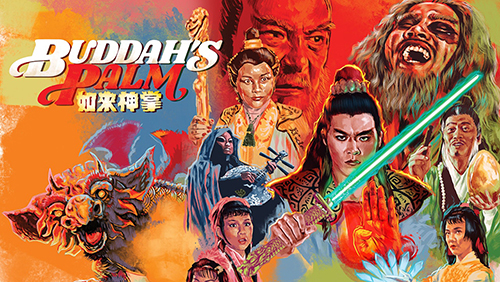
Buddha’s Palm (aka Yue loi san cheung, Rulai shen zhang, Raiders of the Magic Palm) was released in 1982 in Hong Kong. Lung Kim-Fei (Derek Yee Tung-Sing) is a lowly servant carrying scars from his attempts at protecting his master Lau Wah-Hin (Ching Mao). He falls in love with her daughter Lau Ming-Ang (Candice Yu), but becomes upset when she’s to be married to Au-Yeung Ho (Ku Kuan-Chung) instead. After attacking him, Lung is thrown over a cliff whereupon he’s saved by a magical flying creature named Dopey, which takes him to a cave below, inhabited by Koo Hon-Wan (Alex Man Chi-Leung). Blind and nearly mad, Koo takes Lung in as his student to learn the powerful Buddha’s Palm technique, which only Koo possesses. Lung then sets out into the world whereupon he’s met with resistance from many foes, including the Myriad Sword Celestial (Sek Kin), master of the Heavenly Foot technique and former adversary of Koo; and the Martial sisters, Kau Yuk-Kuen (Kara Wai) and Kau Yuk-Wah (Candice Yu again), who are aiding their master Suen Bik-Ling (Siu Yam-Yam). All paths lead to a showdown between Koo, Lung, Yuk-Kuen, and Yuk-Wah against the imposing negative force of Myriad Sword Celestial. Other members of the cast include Lo Lieh, Lung Tien-Hsiang, Chen Szu-Chia, and Yung Jing-Jing.
Encapsulating the story of Buddha’s Palm is near impossible without spoiling half the film. This is one of the most energetic and over-the-top Shaw Brothers releases, at least up to this point. During this era, the wuxia genre was starting to lose its popularity, especially at the box office, and after the release of Star Wars, filmmakers at rival companies like Golden Harvest were attempting to make more fantastical and science fiction-infused projects. (In truth, a lot of other types of cinema across the globe suffered because of the success of Star Wars.) Eventually, Shaw Brothers had to give in and do the same. Buddha’s Palm is highly frenetic and the story is all over the map, rarely giving you the opportunity to take a breath and absorb it, but it’s so well done by a director (Taylor Wong Tai-Loi) with a firm grip on its execution that you can’t help but marvel at it. It’s based upon a series of films that were released between 1964 and 1968, and the story of those films has been highly compressed here into one film, as if it wasn’t obvious. Buddha’s Palm is almost like a comic book come to life, complete with hand lasers, puss-firing, gigantic foot kicking, and even the unmistakable presence of a “lightsaber.” *wink, wink*
Buddha’s Palm was shot by director of photography Wong Chit on 35mm film with anamorphic lenses, finished photochemically, and presented in the aspect ratio of 2.35:1. Arrow Video’s presentation of the film is sourced from a 2024 2K restoration by Arrow Films in collaboration with L’Immagine Ritrovata, the Hong Kong Film Archive, and Celestial Pictures, with grading by R3store Studios. It’s another strong presentation is a boxed set full of films equipped with strong presentations. This one is no exception. It’s cleaner in appearance than most of Arrow’s other new presentations, meaning grain isn’t quite as pronounced. However, detail never suffers as there plenty of impressive textures, even with the frequent opticals. Bitrates sit mostly in the 25 to 35Mbps range and the color palette offers a beautiful array of hues and deep blacks. Aside from very minor speckling, the image is clean and stable throughout with only mild delineation issues.
Audio is included in Cantonese, Mandarin, and English 1.0 DTS-HD Master Audio with optional subtitles in English for the Cantonese and Mandarin tracks and English SDH for the English track. The Cantonese audio is more laid back in the mix while the Mandarin audio is more pronounced. The English audio is your typical canned dubbing, but all three tracks are clean without any issues. It’s also worth noting though that there are lots of differences in the voiceovers in terms of where they’re placed and who’s speaking the lines. As for performances, it’s a toss-up between the Cantonese and Mandarin tracks (though I tend to prefer the Cantonese option in this case).
The following extras are included:
- Audio Commentary by Dylan Cheung
- Alternate Raiders of the Magic Palm English Credits (HD – 1:22)
- Hong Kong Theatrical Trailer (HD – 2:42)
The commentary is handled by writer and Cantonese-English translator Dylan Cheung. Not unlike the film itself, Cheung is breathless and frenetic, but extremely informative. It might take you some time to adjust to his manic wavelength, but it’s worth it if you’re interesting in learning more about the film. Next is a set of Alternate English Credits featuring the title Raiders of the Magic Palm and the Cantonese theatrical trailer. Not carried over DVD releases in Hong Kong and Taiwan are various photo galleries, production notes, and additional trailers.
BUDDHA’S PALM (FILM/VIDEO/AUDIO/EXTRAS): B/B+/B+/B-
DISC EIGHT (BASTARD SWORDSMAN)
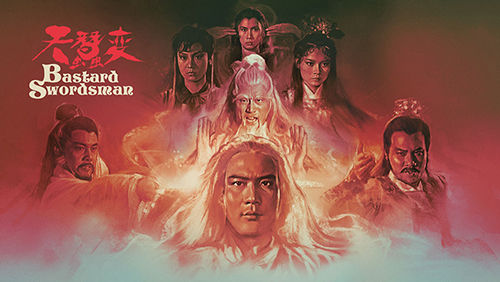
Bastard Swordsman (aka Tiãn cán biàn and Tin cam bin) was released in Hong Kong in 1983, and played with subtitles in US cities such as Honolulu and Los Angeles that same year. Yun Feiyang (Norman Chui) is an orphan who’s constantly bullied by everyone around him at school, though he’s secretly trained in martial arts by a mysterious and cloaked master. The Wudang School’s Chief Qing Song (Wang Yong) is due to battle with Chief Dugu Wudi (Alex Man Chi-Leung), whom he has a longstanding dueling rivalry with. Qing Song ultimately fails, but returns home to train for the next battle in two years, but is ambushed along the way by four assassins. Fu Yushu (Lau Wing aka Tony Liu) comes to Qing Song’s defense, subsequently being allowed into his clan. Unknown to Qing Song is that Fu Yushu has ulterior motives, to infiltrate the Wudang clan for a personal vendetta. He later attempts to frame Yun Feiyang for murder, which forces Yun to reveal his staggering martial arts skills, but in order to defeat Fu Yushu, he must first learn the secret and much coveted “Silkworm Technique.” Other cast members include Lo Meng, Leanne Lau Suet-Wah, Yeung Ching-Ching, Chan Sze-Kai, and Wilson Tong Wai-shing.
Originally a 1979 TV series that was later turned into a novel before being re-adapted as a feature at Shaw Brothers, Bastard Swordsman is also one of the last few wuxia films of the Shaw era. At that time, the company was not doing well, and had even begun trying their hand at television. Norman Chui, who had portrayed Yun Feiyang, returned to the leading role for this film and its 1984 sequel, Return of the Bastard Swordsman. Like many wuxia film projects, the plot tends to get a little convoluted along the way due to the number of characters and their relationships with each other, but the real star of the show is the fight choreography. A predecessor and likely influence on much more revered films like Crouching Tiger, Hidden Dragon, the fight scenes in the film are outstanding, full of great camera work and a seemingly endless amount of variety. Though it’s more pedestrian compared to some of the other Hong Kong films that were being released at the time, Bastard Swordsman is still an entertaining martial arts romp.
Bastard Swordsman was shot by director of photography Philip Ma Kam-Cheung on 35mm film with anamorphic lenses, finished photochemically, and presented in the aspect ratio of 2.35:1. Arrow Video presents the film from a 2024 2K restoration by Arrow Films in collaboration with L’Immagine Ritrovata, the Hong Kong Film Archive, and Celestial Pictures, with grading by Dragon DI, Wales. It’s another clean and organic presentation, with a high level of detail and a fairly consistent bitrate in the 20 to 30Mbps range. The color palette isn’t quite as varied as some of the previous films, but there’s still some strong swatches of red, blue, and purple, as well as deep blacks with nice contrast. Everything is clean and stable, as well.
Audio is included in Mandarin 1.0 LPCM with optional subtitles in English. Unfortunately, the Cantonese track, which is how the film was initially released, is not included since it’s presumably lost. Some sibilance is present on the dialogue, but everything comes through well enough with plenty of support for sound effects and score.
The following extras are included:
- Audio Commentary by Frank Djeng
- Hong Kong Theatrical Trailer (HD – 2:53)
Returning once again is Hong Kong cinema expert and programmer, as well as co-producer of the documentary Enter the Clones of Bruce, Frank Djeng. He’s slightly more low key than usual, but he nonetheless brings his vast knowledge to the table, delving into many aspects of the film, including its source materials, the era in which it was produced, the state of Shaw Brothers Studio in the early 1980s, the careers of the film’s cast and crew, and the qualities of the fight choreography. As usual, it’s a great track. Last is the Cantonese theatrical trailer.
Not included from the Region B Blu-ray release by Spectrum in France are two interviews with author Arnaud Lanuque and the Celestial Pictures re-release trailer.
BASTARD SWORDSMAN (FILM/VIDEO/AUDIO/EXTRAS): B/B+/B-/C+
DISC NINE (BONUS MATERIALS)
- Killer Constable (Korean Version) (HD and Upscaled SD – 104:53)
- Tony Rayns on Chor Yuen (HD – 39:11)
- Intimate Confessions of a Chinese Courtesan:
- Confessions of a Stunt Woman (HD and Upscaled SD – 4:51)
- Theories on Intimate Confessions (SD – 18:01)
- The Magic Blade:
- Martial Heroism: An Interview with Ti Lung (HD – 21:02)
- The Scriptwriter: Sze-to On (HD and Upscaled SD – 15:59)
- Sam Ho on Chor Yuen (HD and Upscaled SD – 14:11)
- Interview with Chor Yuen (SD – 13:22)
- Interview with Yuen Wah (SD – 17:34)
- Interview with Ching Li (SD – 14:56)
- The Avenging Eagle:
- The Eagle Chief (HD and Upscaled SD – 9:12)
- The Blue Eagle (HD and Upscaled SD – 6:12)
Presented with a mix of high definition and standard definition footage is an alternate version of Killer Constable that was released in South Korea only, which has never before been available anywhere else in the world. Arrow was unable to access the 35mm materials necessary to create a proper restoration, so VHS footage was sourced instead. This version features an entirely different opening and ending, various censored cuts, and alterations to the motivations of the main character. To say the least, it’s an interesting version of the film.
Tony Rayns then returns to speak extensively about director Chor Yuen, delving into his upbringing and his entry into the film business, highlighting many of his great successes, examining his latter years, and giving an overall summation of his career and his motivations as a filmmaker.
Next are a pair of interviews devoted to Intimate Confessions of a Chinese Courtesan. Confessions of a Stunt Woman contains a 2004 interview with Sharon Yeung about her work in the film. Theories on Intimate Confessions is a 2003 featurette dedicated to the appreciation of the film by critic Sze Man-hung, musician Kwan King-chung, and filmmaker Clarence Fok.
Following that are a series of interviews about The Magic Blade. Martial Heroism is a 2004 audio interview with Ti Lung about his love of movies and working for Shaw Brothers Studio. The Scriptwriter is a 2003 interview with screenwriter Sze-to On who discusses the environment within Cantonese, Mandarin, and Taiwanese filmmaking, mostly at Shaw Brothers, and how he and Yeung Chit wrote screenplays for many productions. Next is a 2003 interview with film critic Sam Ho who offers his appreciation of Chor Yuen and examines his approach to filmmaking. Following that are three interviews from 2002 with Chor Yuen himself (credited here as Chu Yan), actor Yuen Wah (credited here as Yuan Wah), and actress Li Ching (credited here as Ching Li), all of whom discuss their various careers.
Last is a pair of additional interviews about The Avenging Eagle from 2004. The first, The Eagle Chief, speaks to actor Ku Feng; and the other, The Blue Eagle, speaks to actor Eddy Ko (credited here as Eddy Ko Hung). Both interviews entail each actor’s career, particularly at Shaw Brothers during its heyday.
DISC TEN (SOUNDTRACKS)
Also included are soundtrack selections for eleven Shaw Brothers films, totaling 35 tracks:
MORE MUSIC FROM SHAW BROTHERS CLASSICS
(THE SENTIMENTAL SWORDSMEN / KILLER CONSTABLE / THE AVENGING EAGLE / BASTARD SWORDSMAN / MIGHTY PEKING MAN / CHINATOWN KID / INVINCIBLE SHAOLIN / THE FIVE VENOMS / MAD MONKEY KUNG FU / FIVE SUPERFIGHTERS / THE BOXER’S OMEN)
- Rhythmic Interplay No. 1 by Jack Trombey (2:24)
- Waiting for the Man by Jack Trombey (5:16)
- Drama Sting No. 1 by Paul Ferris (:07)
- Suspense in the Night by Pierre Arvay (3:01)
- The Fountain of Merlin by Pierre Arvay (2:03)
- Blue Castle by Pierre Arvay (1:59)
- Murmures Du Vent (The Moaning of the Wind) by Edward Michael (4:35)
- Chant Plaintif (Song of Sorrow) by Edward Michael (4:00)
- Rite de la Terre by Edward Michael (2:25)
- Rite de L’air by Edward Michael (3:04)
- Rite du Feu by Edward Michael (2:19)
- Rite de L’eau by Edward Michael (2:40)
- The Elements 3 by Eric Towren (2:19)
- The Elements 4 by Eric Towren (1:35)
- The Elements 6 by Eric Towren (1:51)
- Zenith by Eric Towren (1:31)
- Madame Guillotine by Eric Allen & Frank Reidy (2:06)
- Drum Head Court Martial by Eric Allen & Frank Reidy (2:18)
- Dramatic Moments No. 2 by Derek Laren (1:07)
- Algues Rouges (Red Seaweed) by Pierre Arvay (3:09)
- Insert “C” by Basil Kirchin & John Coleman (:22)
- Where the Action Is by Basil Kirchin & John Coleman (1:38)
- Mellow Reflection by Peter Knight (2:28)
- Manoeuvres by Peter Milray (1:59)
- Modern Rhythm No. 1 by M Kansara (2:11)
- Inca by Simon Park (2:11)
- Roving Report No. 3 by Jack Trombey (2:30)
- La Mandragore by Pierre Avray (3:17)
- Duck & Blacker by Johnny Hawksworth & Robin Artus (1:00)
- Comic Capers 1 by Keith Papworth (2:01)
- In Pursuit by Peter Reno (1:16)
- Soul Ceremony by Simon Park (3:12)
- Elegance by Johnny Hawksworth (1:24)
- Roller Drive by Reg Tilsley (2:07)
- Shark by Tim Souster (1:49)
PACKAGING AND FINAL THOUGHTS
All of the discs in this set sit in a large, rectangular, multi-page booklet which contains artwork for each film and listings for each disc’s contents. Alongside it is a 58-page booklet containing a list of its contents; cast and crew information, synopses, film notes, trivia, and “Name That Tune” side panels for each film; the essays One Hundred Years of Chivalry by David West, Drunken Master: Gu Long by Jonathan Clements, and The Legend of Five Station Mountain: Shaw Brothers’ Conquest of the Television Jianghu by Dylan Cheung; various photos from each film; restorations information; production credits; and special thanks. All of this material is housed in a large, rectangular green slipcase resembling the famous “Shawscope” opening logo.
Once again, Arrow Video has proven themselves to be one of the best home video companies in the business, putting together a massive boxed set that many thought would never happen, at least not in as comprehensive a way as this. Shawscope: Volume Three collects together fourteen of the finest selections of Hong Kong cinema from the Shaw Brothers Studio in a way that, despite any minor nitpicks along the way, is a definitive and all-encompassing release. If you’re a fan of Asian cinema in any capacity, this needs to be in your film library. Most highly recommended.
- Tim Salmons
(You can follow Tim on social media at these links: Twitter, Facebook, BlueSky, and Letterboxd. And be sure to subscribe to his YouTube channel here.)